Last Updated: 13th June, 2026 | 07:02:31 PM
Academic Scholarships
The Ultimate Guide to Academic Scholarships: Strategies for Success

Academic scholarships—often referred to as merit-based aid—represent one of the most effective ways for students to bridge the financial gap between the cost of higher education and their available resources.
Academic scholarships are often based on your GPA (Grade Point Average) or other test scores such as the SAT, ACT or similar which you may have to take to qualify. Requirements will vary within this type of scholarship category and you shouldn’t assume that not having the best GPA will automatically exclude you from getting an academic scholarship, so it’s always good to keep this option open.
Whether you are a high school student eyeing an undergraduate degree or an undergraduate looking for postgraduate support, understanding how these scholarships work is essential to your academic journey.
You might also be Interest with these Scholarships
Australian
Institute Research Grant
International
Scholarship for Excellence
The
Marten Bequest Travelling Scholarship
Study
a Bachelor’s in the USA Scholarship
1. What Are Academic Scholarships?
At their core, academic scholarships are financial awards granted to students based on achievement rather than financial need.
Key Characteristics:
Merit-Based: These are awarded for exceptional performance in academics (GPA, test scores) or specialized skills (arts, leadership, or unique research).
Source-Driven: They are often provided by the colleges themselves to attract competitive applicants, but they can also come from private organizations, foundations, corporations, and government agencies.
Non-Repayable: Unlike loans, these funds are yours to use for tuition, books, and sometimes room and board, depending on the specific terms.
2. Types of Academic Scholarships
Scholarships are incredibly diverse.
College-Specific Merit Awards: Many universities automatically assess your application for these based on your high school records.
You often don't even need to fill out a separate application. National & Competitive Awards: These are highly prestigious (e.g., the National Merit Scholarship) and often require specialized testing (like the PSAT) or comprehensive essay submissions.
Departmental & Major-Specific: These are offered by specific faculties (e.g., Engineering, Humanities) to reward students showing immense promise in a particular field of study.
Identity-Based & Specialized Awards: Many scholarships exist for specific demographics, such as first-generation college students, women in STEM, or members of underrepresented communities.
3. How to Find and Win Scholarships
Winning a scholarship is a skill in itself. It requires organization, authenticity, and persistence.
The Search Phase
Cast a Wide Net: Don't just target the "famous" national awards. Local, community-based, and club-affiliated scholarships often have far fewer applicants, significantly increasing your chances of success.
Use Reliable Aggregators: Websites like Fastweb, Scholarships.com, or official university financial aid pages are the most accurate sources.
Leverage Connections: Check if your parents' employers, local religious organizations, or civic groups offer small educational grants.
The Application Phase
Follow Instructions Exactly: Scholarship committees receive thousands of applications. If you fail to include a required document or exceed a word count, your application will likely be disqualified immediately.
Craft a Compelling Narrative: Grades show what you achieved; essays show who you are. Use your essays to explain your goals, the challenges you have overcome, and how this specific scholarship aligns with your future vision.
Show, Don't Just Tell: Instead of stating "I am a leader," describe a specific project where you took initiative and detail the tangible results.
Proofread Religiously: Spelling and grammatical errors suggest a lack of attention to detail.
Set your draft aside for 24 hours, then read it again with "fresh eyes," or ask a teacher to review it.
4. Staying Eligible: The Maintenance Requirement
Winning the scholarship is only half the battle. Many academic scholarships are renewable, meaning you receive them every year, provided you hit certain benchmarks.
⚠️ Crucial Note: Always check the fine print regarding maintenance. Common requirements include maintaining a minimum GPA, staying enrolled full-time, or participating in specific extracurricular activities or service projects.
5. Strategic Checklist for Applicants
| Phase | Priority Action |
| Research | Create a master spreadsheet of deadlines, requirements, and links. |
| Preparation | Identify 2–3 mentors (teachers/counselors) who can write glowing letters of recommendation. |
| Drafting | Brainstorm unique life experiences that set you apart from other high-achieving students. |
| Submission | Review the application twice for formatting errors before the deadline. |
- MTN Foundation Scholarship: Provides up to ₦300,000 per year for 300-level STEM and medical students (including a stream for blind students).
- Federal Ministry of Education: Manages local and international scholarship allocations for Nigerian students across various study levels.
- Institutional Scholarships: Many local private universities, such as Nile University, offer up to a 100% tuition scholarship to undergraduates who score 330+ on the JAMB and have at least 5 A's in O-Level results. [1]
- NLNG Scholarship: Offers up to ₦300,000 yearly for fresh 100-level students enrolled in federal and state universities. [1]
- GREAT Scholarships: British Council awards worth £10,000 toward tuition for one-year taught postgraduate courses across UK universities.
- Chevening Scholarships: The UK government’s global scholarship program offering fully funded master's degrees for individuals with strong academic and leadership backgrounds.
- Fulbright Foreign Student Program: Provides grants for graduate students and young professionals to study and conduct research in the United States
Similar Articles:
Mpower Mba Scholarship International Students
New International Scholarship Opportunities
Monthly
MPOWER
Women in STEM Scholarship
Cystic Fibrosis Foundation Clinical Fellowships Program
A Final Piece of Advice
Persistence is the secret ingredient. Scholarship applications can feel like a numbers game. You will inevitably face rejections, but every application you submit is an opportunity to refine your narrative.
Related Posts
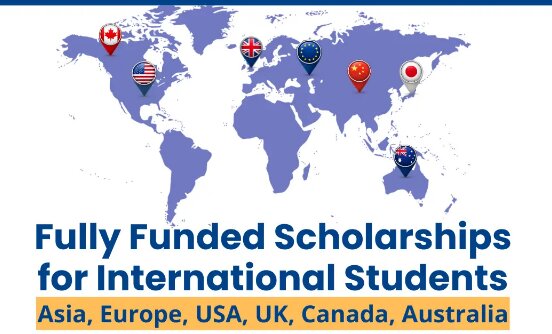
How To Get An International Scholarship...
13th June, 2026
Scholarships for International Students...
13th June, 2026
School Specific Scholarships...
13th June, 2026

Situational Scholarships...
13th June, 2026
Special Interest Scholarships...
13th June, 2026
Athletic Scholarship...
13th June, 2026

Study a Bachelor’s in the USA Scholarship...
13th June, 2026
The Marten Bequest Travelling Scholarship...
13th June, 2026
International Scholarship for Excellence...
13th June, 2026
Australian Institute Research Grant...
13th June, 2026

Cystic Fibrosis Foundation Clinical Fellowships Program...
13th June, 2026

MPOWER Women in STEM Scholarship...
13th June, 2026
Categories
Blog Posts






Breaking News
We usually sends BREAKING News to students of National Open University, NOUN. Not to miss any of our latest updates, enter your email here