Last Updated: 23rd June, 2026 | 06:06:09 PM
GMAT Sentence Correction removed
GMAT Sentence Correction Removed: What It Means for Nigerian MBA Applicants
The global landscape for graduate business school admissions has completely shifted. If you are a prospective MBA or MSc candidate in Nigeria planning to write the Graduate Management Admission Test (GMAT), you can finally drop the thick grammar textbooks. The Graduate Management Admission Council (GMAC) has permanently removed Sentence Correction (SC) from the exam.
This major change came with the full transition to the streamlined format of the test. For years, Nigerian applicants—especially those from non-engineering backgrounds—dreaded the verbal section due to its hyper-specific focus on idioms, modifier placements, and obscure American English grammar rules.
Whether you are balancing your test prep with navigating the
GMAT
Focus Edition vs Classic changes
GMAT
Focus score scale 205 to 805
Is
geometry on the GMAT Focus Edition
Why Did GMAC Remove Sentence Correction?
The decision to eliminate Sentence Correction wasn’t accidental. Business schools globally have shifted their expectations for incoming candidates. Admissions committees are no longer looking for individuals who have memorized textbook grammar mechanics; they want leaders who can analyze information, manage data, and make quick decisions under pressure.
By removing Sentence Correction, the exam now puts the spotlight entirely on functional business skills. According to GMAC, advanced data interpretation and logical reasoning are much better predictors of success in modern business school classrooms than a student's ability to spot a misplaced parallel structure in a 40-word sentence.
How the GMAT Verbal Section Looks Now
With Sentence Correction completely out of the picture, the Verbal Reasoning section has become much shorter and heavily focused on pure logic.
The section now lasts 45 minutes and consists of 23 questions covering only two major question archetypes:
1. Critical Reasoning (CR)
Critical Reasoning questions test your ability to evaluate, strengthen, weaken, or break down short arguments.
2. Reading Comprehension (RC)
Reading Comprehension assesses your ability to read a dense academic or business passage, understand the primary purpose, find specific details, and make logical inferences based on what is explicitly written.
The Good News for Nigerians: Because Nigerian higher education is taught entirely in English, native and fluent speakers often possess strong natural logic and reading skills. Eliminating the need to memorize archaic grammatical rules creates a much more level playing field for Nigerian students competing for global Ivy League MBA scholarships.
3 Major Impacts on Your Study Strategy
If you are using older GMAT preparation materials or inherited official guides from past test-takers, you must modify your study plan immediately.
1. Trash the Old Grammar Drill Books
Do not waste time practicing with GMAT Official Guides published before the structural update. Any chapter covering subject-verb agreement, pronoun references, or idioms is officially obsolete for this exam.
2. Shift Your Focus to Data Insights (DI)
The time you would have spent memorizing grammar rules must now be redirected toward the newest core section: Data Insights. This section is now weighted equally with Quant and Verbal, meaning your data interpretation skills will directly impact your score out of the new 205–805 scale.
3. Master Active Reading Mechanics
Since the entire Verbal section is now 100% text-passage heavy, your reading speed and stamina are your greatest assets. Practice active reading—learning how to map paragraphs, identify the author's tone, and find the core conclusion of an argument on your first read.
GMAT Structural Evolution at a Glance
To visualize how the test components have changed, refer to the comparison table below:
| Exam Feature | Old GMAT Format | Current GMAT Format |
| Sentence Correction | Tested heavily (~1/3 of Verbal) | ❌ Completely Removed |
| Geometry Math | Included | ❌ Removed (Only Coordinate Algebra remains) |
| Analytical Writing (Essay) | Required | ❌ Completely Removed |
| Total Test Duration | Over 3 hours | ⏱️ 2 hours, 15 minutes |
| Scoring Scale | 200 – 800 | 205 – 805 |
| Answer Editing | Not allowed | ✅ Can edit up to 3 answers per section |
Moving Forward with Your Academic Goals
The removal of Sentence Correction makes the GMAT a shorter, more intuitive, and highly efficient test. If you have been delaying your business school applications because you were intimidated by the grammar requirements, now is the ideal time to start your preparation.
As you coordinate your global academic journey, remember to keep your foundational profiles updated. For those tracking local academic pathways, screening timelines, or direct entry verifications alongside international exams, staying informed via verified
You may also like;
GMAT Score/Results: A Complete Guide
Scholarships at Wichita State University (WSU)
IELTS Writing Task 2 FAQs
Related Posts

Is geometry on the GMAT Focus Edition...
23rd June, 2026
GMAT Focus score scale 205 to 805...
23rd June, 2026
GMAT Focus Edition vs Classic changes...
23rd June, 2026
How to Send Your GMAT Scores to Business Schools...
2nd June, 2026
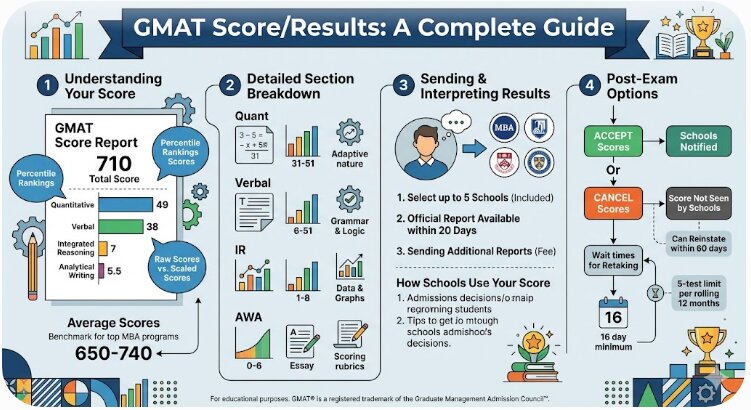
GMAT Score/Results: A Complete Guide...
28th May, 2026
Categories
Blog Posts






Breaking News
We usually sends BREAKING News to students of National Open University, NOUN. Not to miss any of our latest updates, enter your email here